Good Design Fails When the Question Is Wrong
By Trupti on 05 Jan 2026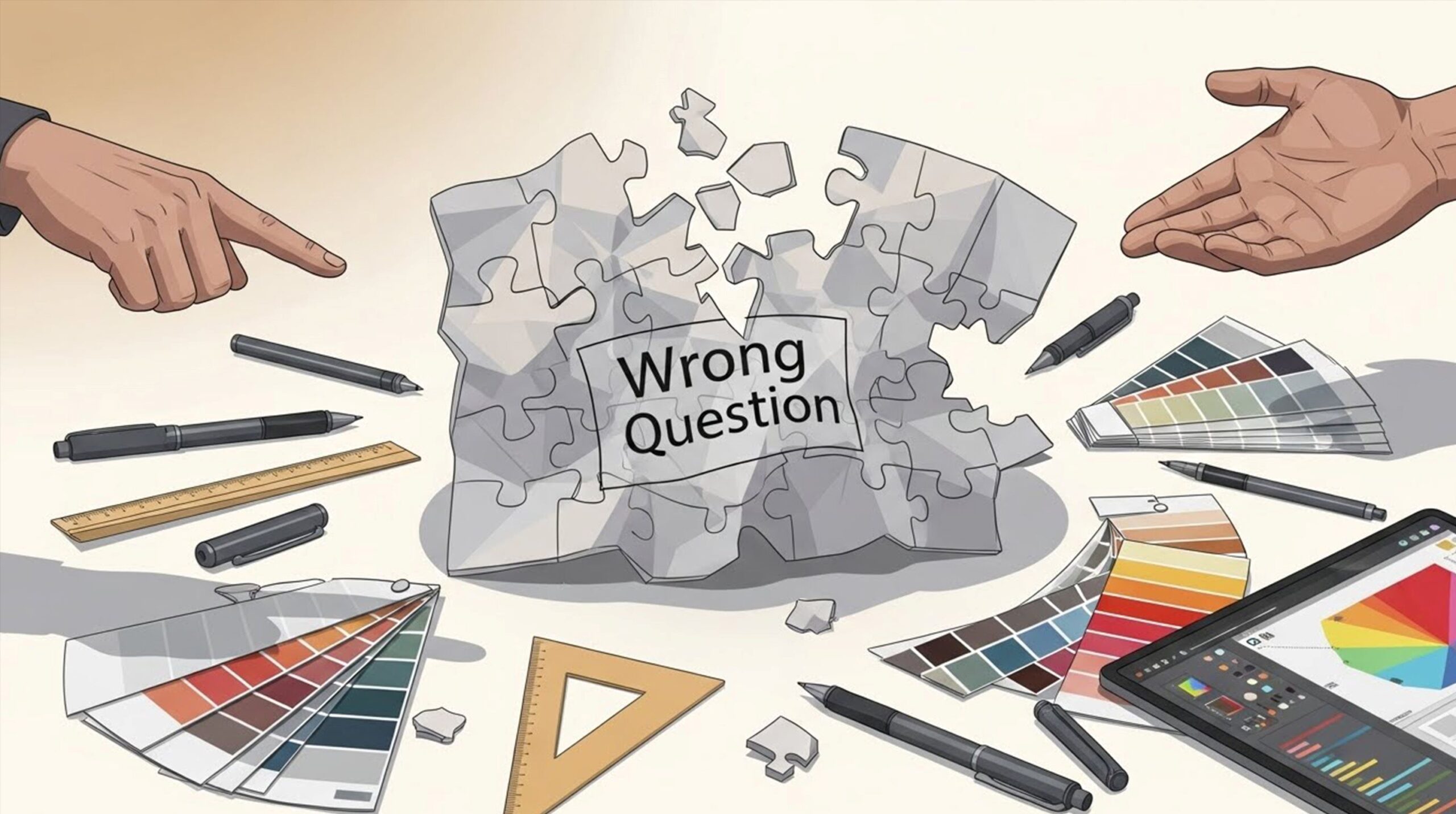
Design is more than visuals—it’s problem-solving. Many Good Design fails not because of execution, but because the wrong question was asked at the start.
In modern workflows, designers often receive briefs that are already solution-oriented:
- “We need a new logo”
- “Redesign the website”
- “Make it more modern”
These are solutions, not problems. When designers jump straight to execution, they risk creating work that looks good but fails to solve the underlying issue.
The key to effective design is framing the problem before designing the solution.
Why Problem Framing Matters
Designers who pause to ask better questions achieve better results. Instead of asking,
“How should this look?” they ask,
“Why isn’t this working?”
They focus on understanding goals, users, and context before deciding on layout, color, or typography.
Design thinking frameworks emphasize this approach. Learn more here: IDEO Design Thinking
Many designers fail to challenge the initial brief, which is often incomplete or misleading.
Why Designers Must Question the Brief
- Clients confuse symptoms with problems: Low engagement becomes “bad design,” not a deeper user issue.
- Speed is prioritized over clarity: Teams rush to deliver rather than understand.
- Designers are asked to “just design”: Late involvement reduces design to decoration instead of strategic impact.
Questioning assumptions early prevents wasted effort and ensures the design actually addresses the real problem.
Good questions produce better design outcomes than simply working faster.
Examples of Wrong vs Right Questions
- Wrong: “How can we make this app look cooler?”
Right: “Why are users dropping off after the first screen?” - Wrong: “Can you redesign our homepage?”
Right: “What action should users take, and why aren’t they taking it now?” - Wrong: “Which trend should we follow?”
Right: “What fits our audience, brand, and long-term goals?”
The quality of the question directly determines the quality of the solution.
Experienced designers go beyond aesthetics—they create clarity.
How Thinking Designers Add Value
- They ask why before how.
- They translate business objectives into user-centered solutions.
- They separate assumptions from facts and challenge the status quo.
- They ensure design solves problems, not just looks good.
This strategic thinking is why experienced designers are invaluable, even before touching design tools.
You don’t need permission to improve your thinking as a designer.
Questions Designers Should Always Ask
- What problem are we really solving?
- Who is affected by this problem?
- What happens if we don’t solve it?
- How will we know the design worked?
- What assumptions are we making?
Asking these questions early prevents wasted effort and ensures the design delivers real impact.
Learn more about problem framing: NNG UX Insights
At the end of the day, design maturity is measured by judgment, not style.
Final Thought
Beautiful visuals don’t guarantee success. Effective design solves the right problem and improves outcomes for users and businesses.
Before starting a project, pause, think, and ask better questions. When the question is right, good design follows naturally.
Join Our Mail List
To get latest updates on courses and news regarding education.