Design in the Age of AI: The Skills That Will Matter
By Trupti on 26 Jan 2026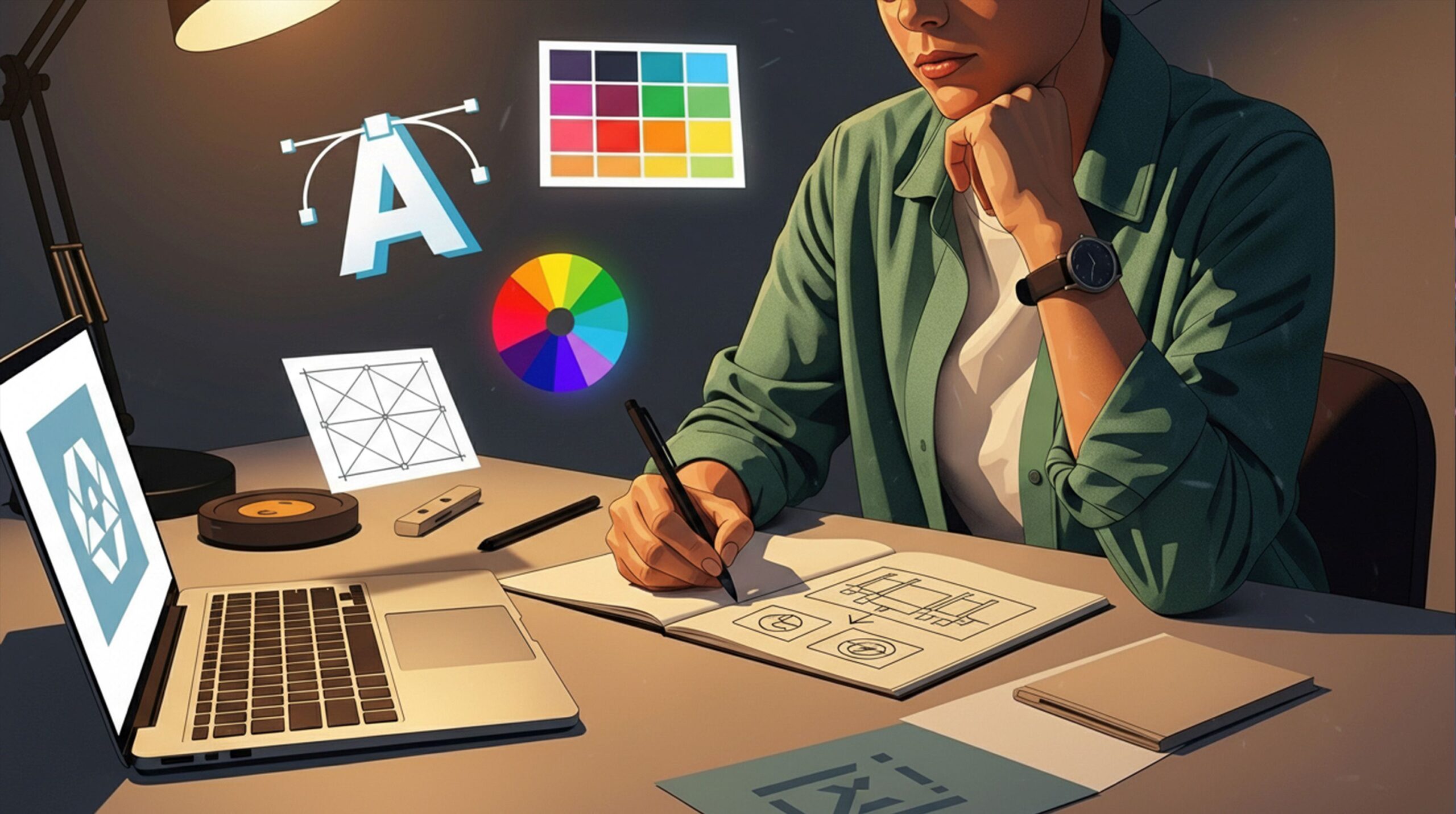
Design in the Age of AI is changing how design work is done, but it is not changing what makes a designer truly valuable. While tools are becoming faster and smarter, creative thinking, human judgment, and problem-solving skills remain impossible to automate.
Why Tools Alone Are No Longer Enough
Modern design software powered by AI can generate layouts, suggest typography, and even build prototypes in minutes. Platforms like
Adobe Sensei and Figma AI
prove that execution is becoming automated.
However, automation only handles surface-level tasks. It cannot understand business goals, user emotions, or long-term product strategy.
In the future, designers who rely only on tools will struggle, while designers who think strategically will lead the industry.
Skill 1: Problem Framing and Strategic Thinking
Before solving a problem, great designers first define it correctly. Problem framing helps identify what truly matters instead of blindly following briefs.
According to the Nielsen Norman Group, designers who frame the right problems deliver more impactful solutions than those who focus only on visuals.
This skill allows designers to guide products, influence decisions, and design with purpose rather than decoration.
Skill 2: Human-Centered Design and Empathy
AI can analyze behavior patterns, but it cannot feel frustration, excitement, or confusion. Human-centered design focuses on understanding emotions and designing experiences that feel natural and supportive.
The Interaction Design Foundation explains how empathy-driven design leads to better usability and trust: Human-Centered Design Principles
Designers who deeply understand users will always have an advantage over automated systems.
Skill 3: Judgment and Decision Making
AI can suggest multiple design options, but it cannot decide which one aligns best with brand identity, accessibility, and business goals.
Strong designers evaluate trade-offs, defend their choices, and take responsibility for outcomes.
This decision-making ability separates execution-level designers from design leaders and product strategists.
Skill 4: Communication and Storytelling
Design does not succeed unless others understand it. Designers must explain ideas clearly to developers, managers, and stakeholders.
Harvard Business Review highlights the power of storytelling in leadership and creative work: Why Your Brain Loves Good Storytelling
Designers who communicate well gain influence and help shape product vision beyond visuals.
Skill 5: Ethical and Responsible Design
AI introduces serious design responsibilities, including accessibility, data privacy, and bias prevention.
The World Wide Web Consortium provides accessibility standards every designer should follow: W3C Accessibility Guidelines
Designers who understand ethical design will protect users and build long-term trust in digital products.
Skill 6: Systems Thinking
Modern products are complex systems, not single screens. Designers must understand how interfaces connect across journeys, devices, and platforms.
The Interaction Design Foundation explains how systems thinking improves scalability: Systems Thinking in UX
This skill helps designers create consistent experiences that grow with products over time.
Skill 7: Learning How to Learn
Tools will continue to change, but adaptability keeps designers relevant. Continuous learning allows professionals to evolve with technology instead of fearing it.
Designers who experiment with AI instead of resisting it gain faster workflows and deeper insights.
The ability to learn quickly may become the most important design skill of the future.
Final Thoughts
AI will not replace designers who think critically, design ethically, and communicate clearly.
The future belongs to designers who combine human intelligence with artificial intelligence.
In the age of AI, your greatest advantage is not your software knowledge — it is how well you understand people, problems, and possibilities.
Join Our Mail List
To get latest updates on courses and news regarding education.